

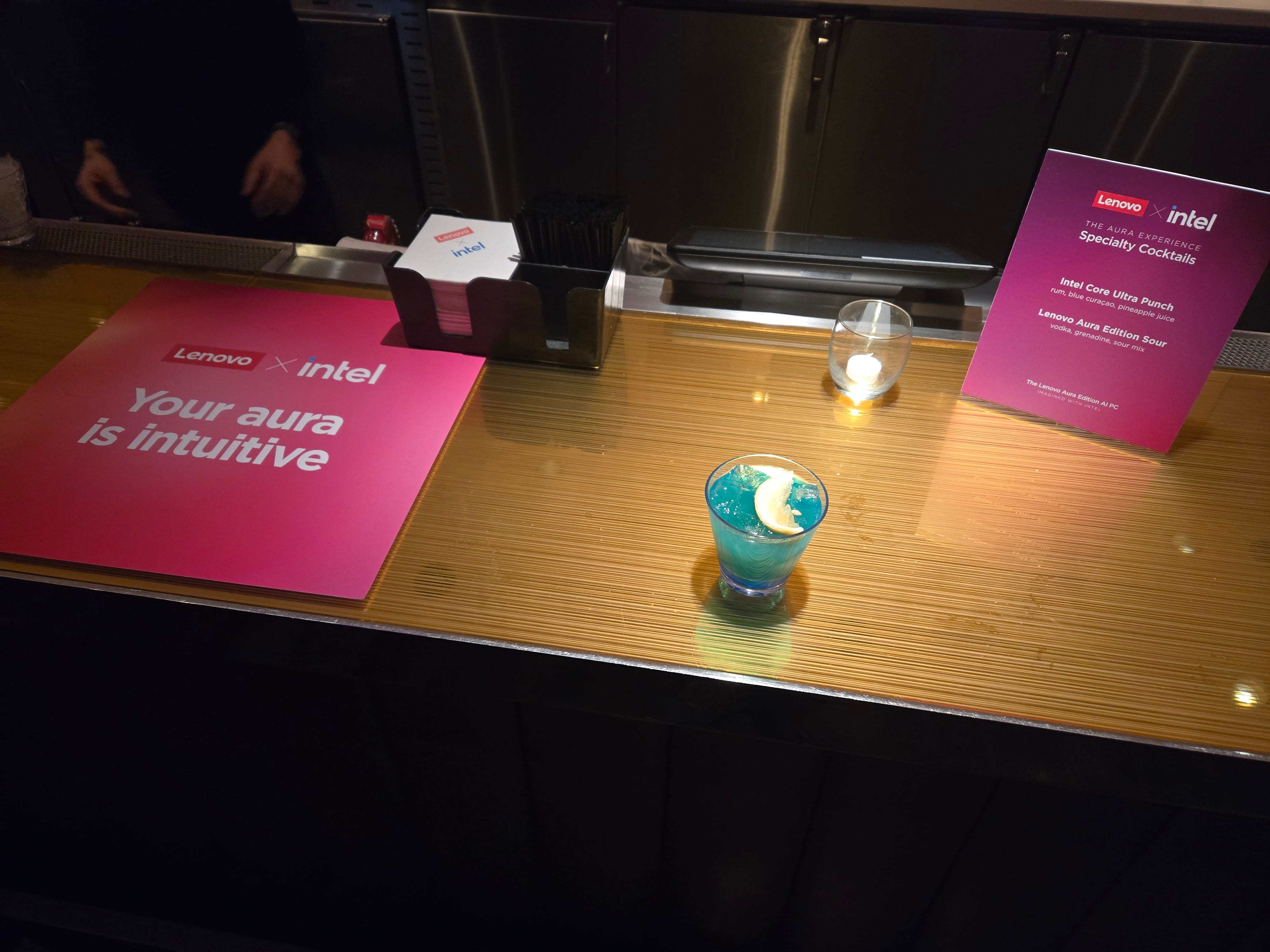
So there I was, sipping an Intel Core Ultra Punch in the XS night club at the Wynn. It was impossible to have a conversation — the music was too loud. We left pretty quickly.
My first time at CES, slipping into parties like this was a new experience. I felt like I “made it,” like I was important. Going from writing about PCs on your computer to being someone important enough to schmooze in Vegas is quite a shift. But I never really got much out of these parties.
These days, it’s fun walking around with my CES badge saying “The Windows ReadMe” — my own newsletter, not even the name of a bigger publication I write for — and slipping below the radar. It’s fun getting into the night club, ordering a single drink, deciding it’s not interesting, and leaving in five minutes.
✈️ I’ll be back with something a little more software-centric next week, after I make the journey east out of the desert. This week, the newsletter is about CES.
Human connection in the AI desert
Being back in Vegas for CES 2026 is weird. I did get to see many faces I haven’t seen in three years — and some I haven’t seen in six years! Many of the people who I used to see every year here no longer attend. Many of the talented people I used to work with have left the industry for PR, marketing, or other roles. And I’m one of just a handful of independent freelancers I know here — most people I know are in staff roles.
I’ve had so many great face-to-face conversations with so many people. A big thanks to the PCWorld team in particular! Their live blog is fun, and it reminds me of what we used to do at How-To Geek.
As someone who’s back to freelancing, Jared Newman (check out his Advisorator and Cord Cutter Weekly newsletters) and Matthew S. Smith (here’s a video interview I did with him) are inspirations to me.
This week, I found myself discussing how much readers have enjoyed shorter newsletters. Ed Zitron was sitting next to me and, I believe, joked that he also tries to keep his newsletters short. CES is the place where a moment like that happens. The night club isn’t the point.
AI soulmates (or: how I sacrificed thousands of dollars)
If there’s a theme of CES this year, it’s AI — obviously. As I said to someone: “Everything is AI, even the things that aren’t AI.”
Beyond generative AI, there are a lot of robots here. Not all of them work very well. Many of them don’t seem to work well at all. But there’s more robotics energy than there used to be.
AI companies are eager to sell you products to replace human connection, too. Dipal wants to sell you “your soulmate” as a product. I don’t think your soulmate should be a product or subscription you buy, but tech companies would love for you to think otherwise.
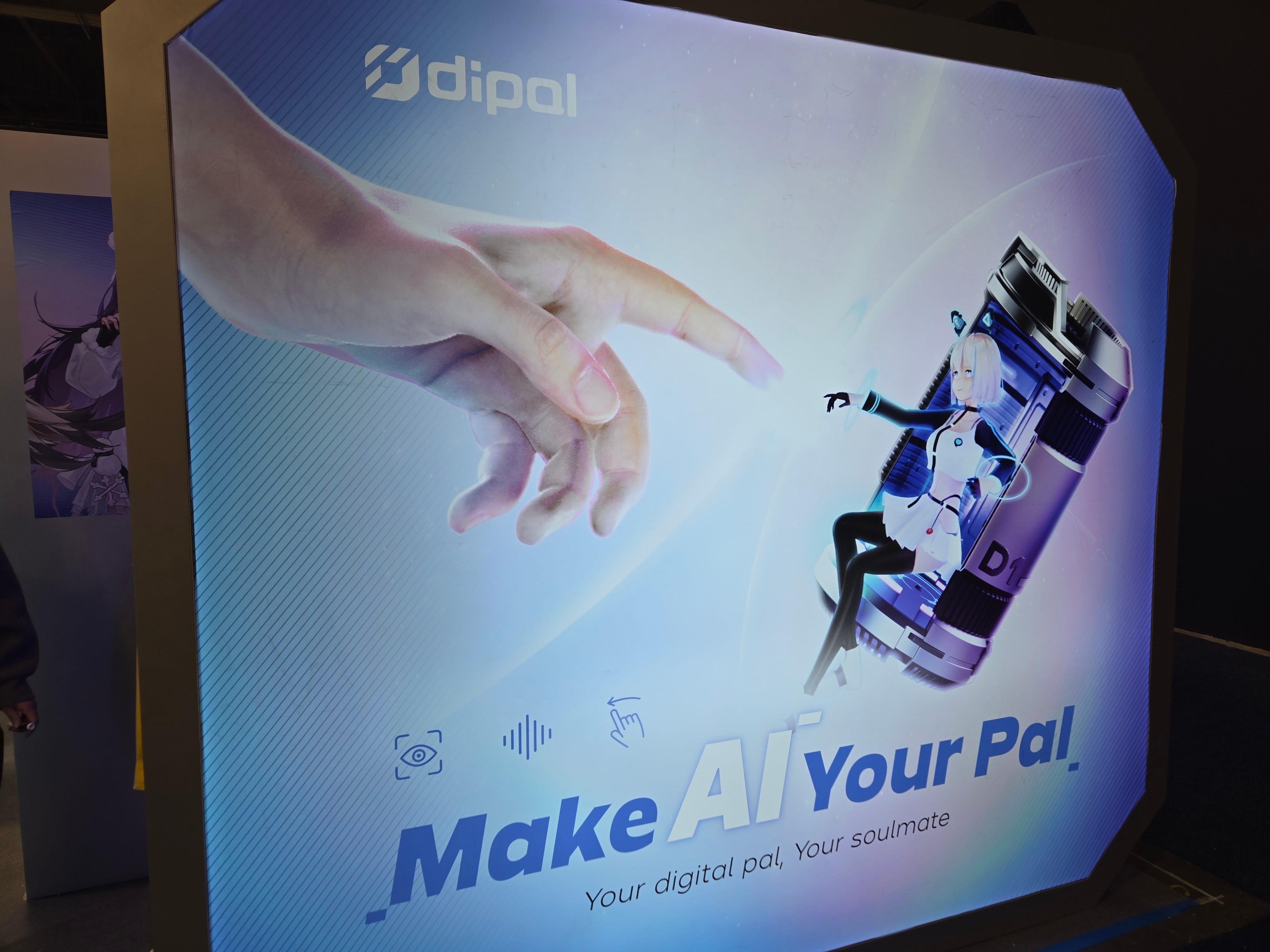
This is something I’ve been thinking a lot about lately. Over the holidays, I walked away from an introduction to AI for a well-known print publication, giving up months of work and thousands of dollars. That publication wanted people to start by thinking of AI chatbots as something akin to a “friend.” But I don’t think your friend should be a software service sold to you by a company. Luckily, there was still time to withdraw from the assignment and prevent them from publishing any of my words.
Losing a magazine cover story stings, and lighting thousands of dollars on fire for ethical principles is tough. But I talked to the people at the Dipal booth, and they didn’t seem to understand why I was concerned about them calling an AI product “your soulmate.” That confirmed to me I made the right decision.
While I’ll write about AI, I won’t present it as your friend or soulmate. It doesn’t matter how many thousands of dollars someone offers to pay me.
What’s new for PC hardware
But let’s talk about the tech, too. First of all, CES is super hardware focused. Microsoft does not have any Windows announcements here. For the most part, it’s all about new hardware. I want to give you a list of the most relevant, PC-focused stuff you can check out if you’re interested!
🤖 Nvidia has some new software features. Nvidia didn’t have any new graphics hardware to announce, but it did launch DLSS 4.5. For gamers, the new technology promises improved performance and better image quality on existing graphics cards. My colleagues at PCWorld have great writeups of DLSS 4.5, how Nvidia is pursuing neural rendering in the future, and the G-Sync Pulsar tech for esports-focused gaming monitors.
💧 Intel announced Core Ultra (Series 3) chips — this is the hardware codenamed “Panther Lake.” It feels like Intel is “getting is mojo back” — that’s at least how the hype feels. Panther Lake corrects some of the worst sins of Lunar Lake: Intel now manufacturers these chips itself, and they should have much better multithreaded performance. Here’s a deeper dive. Intel is even showing off integrated graphics that rivals discrete graphics. I also like how Intel is simplifying the CPU names.
🔥 AMD has Ryzen AI 400 series processors — including some desktop models, bringing Windows Copilot+ PC AI features to desktop PCs, if you care — and new Ryzen AI Max+ CPUs. Improvements to ROCm, AMD’s answer to Nvidia’s CUDA, sound like a big deal for GPU-based compute tasks, including local AI.
🐉 Qualcomm already announced Snapdragon X2 Elite chips earlier this year, and lots of PC manufacturers are showing off Snapdragon X2-powered machines already. Qualcomm announced Snapdragon X2 Plus hardware for more affordable machines.
I could talk about PC makers, too. There are a lot of swanky laptop designs with dual screens, impressively light materials, and long battery life thanks to the new hardware. They do feel good in my hands.
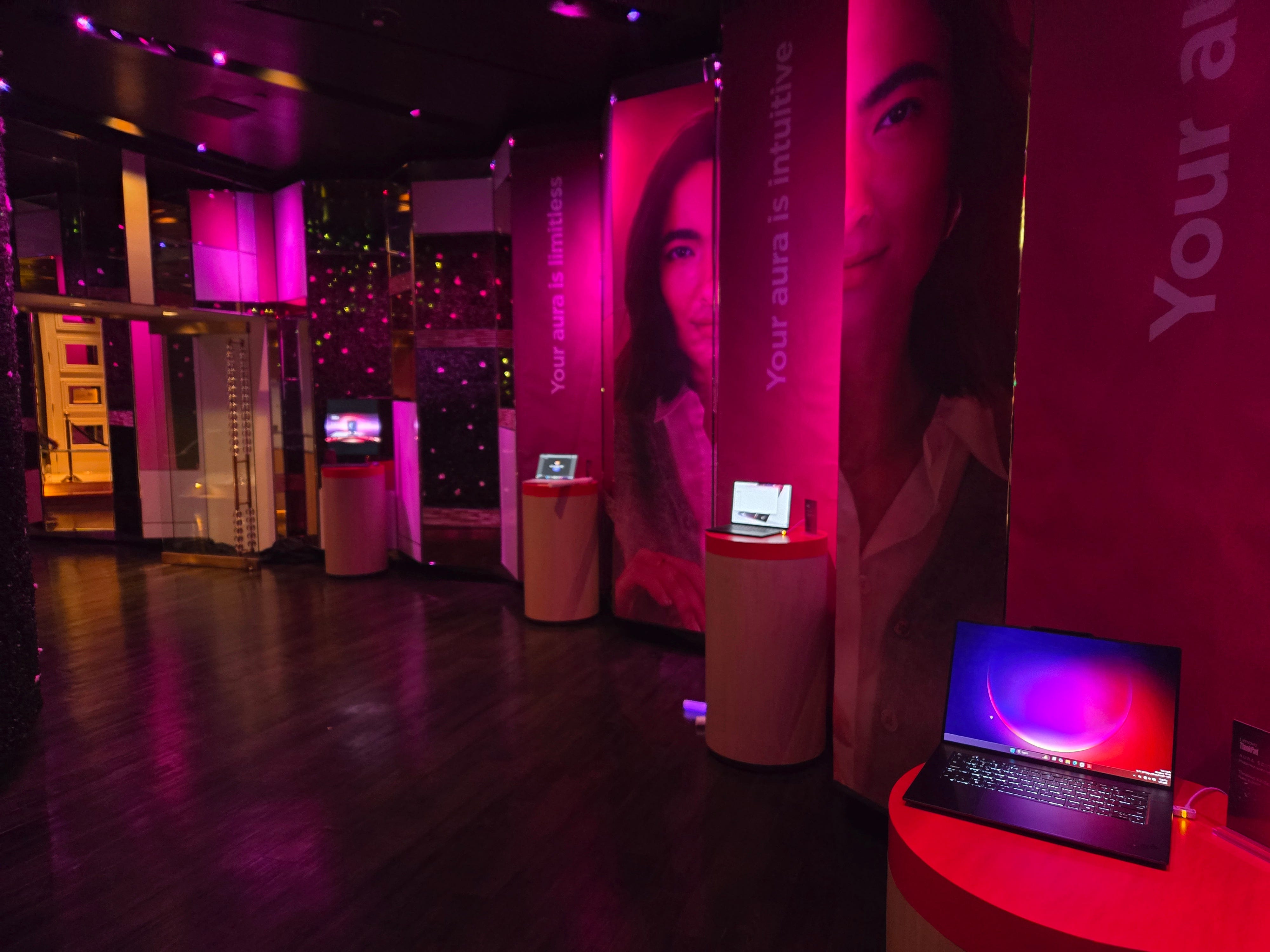
If I think back to what the PC market was like a decade ago, it’s really impressive how good the laptops are now. Every bit of the experience — display, performance, build quality, battery life, and so on — has improved by leaps and bounds. It’s helpful to keep that perspective. It’s unclear when all these new designs will hit the market or how expensive they’ll be, but that’s something for the future.
I will say it’s basically impossible to test any laptop or hardware here in person. At most, I can hold a device in my hands and get a sense of how the materials and build feels. I can’t test how laptops behave in real-world performance tests. I can’t even tell you how their displays look — the lighting is weird.
The tech industry as a whole feels weird. There’s optimism despite the ambient background dread, but the dread is real. There’s a lot of excitement about the new hardware and technology. There’s also a lot of confusion about RAM prices and what they mean for these designs, price-wise. Tariffs are another factor, although no one is talking about them. And if China invades Taiwan, this all seizes up.
🏜️ Anyway, CES 2026 was a beautiful mirage in the desert full of awesome people, often-impressive hardware, AI products that went too far, hollow night club parties, and a media industry that still — despite everything that’s happened over the years — is paying my bills. And that’s enough.
Thanks for reading this, and I’ll be back at you with Windows again next week. I’ve also got another piece I plan on writing for paying supporters in the coming days — stay tuned!
I understand that it hurt at the time, but i applaud you for turning down the article about AI "companions". I'm ready for the reality to replace the hype when it comes to AI. It's a useful tool but the industry is placing way too much emphasis on something that they don't completely understand (except for the dollars that it generates!).
It does concern me that people will view machines as soulmates. There are already stories of individuals forming bonds with AI, and I can see this changing into something that is not healthy, as some people will develop attachments previously reserved for people, now available for things.