

Have you seen the news? RAM prices are skyrocketing. We could be living through the end of the golden age of cheap RAM at the moment, and your next computer might have less RAM than your current one — or cost a lot more. AI data centers are hoovering it up.
I just reviewed a laptop for PCWorld, and I cringed when I saw it had 8GB of memory. In recent years, 16GB has become standard. But mass-market laptops might be headed back down to 8GB real soon. Maybe we’ll have to learn to expect less from future computers.
RAM prices are spiking so fast that stores are starting to sell RAM at “market prices.” Say goodbye to Crucial RAM, too: Micron is exiting the Crucial RAM business — instead, the company is selling memory to data centers.
⚡ This week’s newsletter is a bulletin about the most important PC story this week.
⚙️ Looking for a RAM-related tip? Try opening the Start menu and searching for “Windows Memory Diagnostic.” Microsoft’s memory-testing tool can test your PC’s memory for hardware problems. Hopefully you don’t need to replace it!
For a more detailed look at how we got here, this piece at Tom’s Hardware, published back in early October, explains what’s going on. As it says, some people are predicting a RAM shortage for the next decade.
SSD prices are increasing, too, but the biggest impact has been on RAM — so far.
PC prices are already going up. CyberPowerPC announced it’s raising prices because RAM prices have increased by 500% and SSD prices have increased by 100%. HP is talking about raising PC prices and reducing RAM configurations.
OpenAI’s Stargate data center project alone may consume 40% of global RAM output. The industry just can’t scale up fast enough to meet demand.
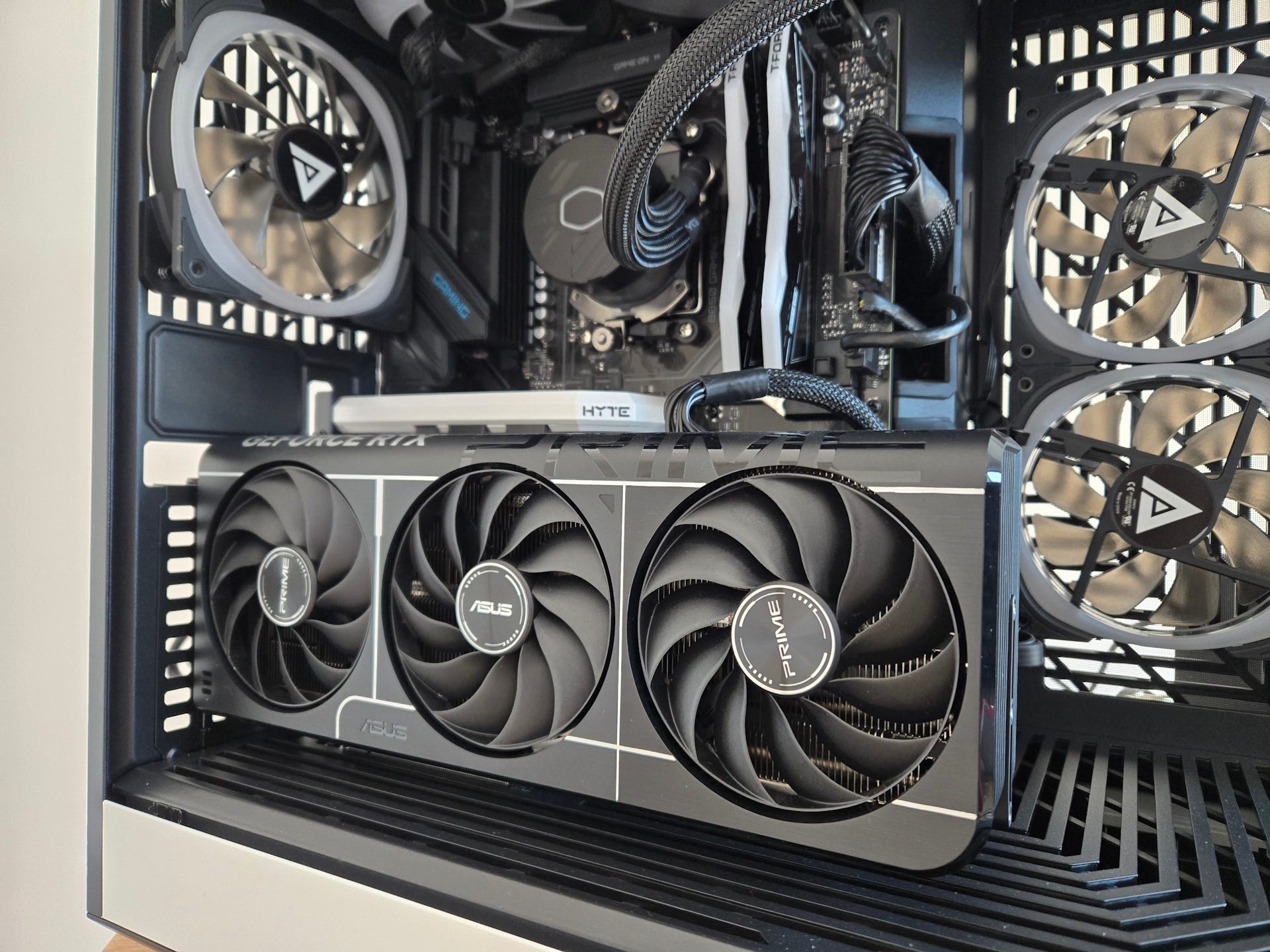
I won’t pretend I know how expensive RAM may get in the coming years — and how the industry will react. It would be nice if prices settled down, but it’s hard to imagine that. Instead, it’s looking more like future PCs may have less RAM at the same price points. It’s more bad news for PC prices in a year of price hikes.
So what can you do? Well, the price shocks haven’t hit the entire market yet. Not every manufacturer has raised prices. There are still some deals to be had.
In the long term, though — who knows. It’s not the best time to buy a laptop right now, with CES a month away and lots of new hardware around the corner. But who knows how expensive those new PCs will be — or how much RAM they’ll have. And this will be a problem beyond PCs, too: For phones, tablets, game consoles, and other gadget.
It’s funny: To take better advantage of local AI, you need lots of memory. But AI data centers for running cloud AI models are driving up the price of RAM. The future may involve more cloud AI and less local AI — if only because computers with enough RAM for local AI may be prohibitively expensive.
News from Thurrott.com
The Windows ReadMe is the official newsletter partner of Thurrott.com, and I’m always proud to share news from Paul Thurrott’s website. So here we go:
The most interesting story of the week to me was Valve bringing Windows games to Linux on ARM PCs. (Valve already runs Windows games on Linux, of course — it’s why the Steam Deck is so popular.)
For Thurrott Premium subscribers, Paul has a great piece about saying no to renting software.
Also: OpenAI is turning over ChatGPT logs, Google is testing deeper AI Mode integration in search, and Microsoft is raising rates for Microsoft 365 Commercial plans.
Could be that folks start writing super tight code again. Code that maximise every last kilobyte of RAM so that you don't need double-digit GBs of the stuff just to launch a bloated text editor on an even more bloated operating system
Problem is that half the coders these days need AI assistance just to come up with the code needed to to print 'Hello World' in a console.
Catch-22, anyone?
Who knew! Because of the EOL on Windows 10, I decided to upgrade my two main PCs. One was a 5-year-old HP 17-inch Laptop. Ironically, I never traveled with it, not once; I just put a 43-inch curved monitor, mouse, and keyboard, and used it for work over the pandemic. Over that time, problems with Bluetooth, trackpad, and battery made it into a desktop, LOL. But no worries. The other was a 10-year-old HP tower. Both had 32 GB of RAM.
The point is that, as a Windows Software Deployment engineer, I always used my devices as virtual labs, and when I purchased them, 32 GB was the maximum configuration. I have found that buying the maximum RAM at the time of purchase means my devices last longer. The bottom line is that by spending more upfront, you save money, a lot of money, by not having to upgrade as often or as the old cliche states, "If you buy cheap, you buy twice (or more). This has been my experience over the last 30 years.
So when the Microsoft Surface Pro 11th Edition, Snapdragon X31, 1 TB drive, 32 GB RAM, came out, I wanted to be on the cutting edge. However, at first, this device was bleeding edge; that was in March of 2025. Now compatibility issues have been remediated, and it is a nice device.
The Surface Pro Flex Keyboard with backlighting is excellent; no need for a plugin keyboard, which amazed me.
Then, on impulse in July, while on Amazon Prime, I purchased a mini pc, specifically a Beelink SEi14 Mini PC, Intel Ultra 9 185H (up to 5.1GHz) 16C/22T, Mini Computer 96GB DDR5 5600MHz 2TB PCIe4.0 SSD, Triple Display HDMI&DP/Thunderbolt 4/WiFi6/BT5.2/NPU/4K 60Hz/Support AI (New)
Look closely at the config: 96GB Ram, Intel Ultra 9 5.1 GHz, the ultimate virtual personal lab, for $1000. The Beelink company's configurations are changing rapidly, and the current ones are being tweaked to keep the price close.
After 6 months with this device, using Hyper-V, I am delighted. Only minor driver issues, which I resolved and notified the manufacturer. They responded with a thank you within 48 hours—a Chinese company, of course.
So, as far as the RAM issue goes, buy now and buy as much as you can afford.
However, the relatively low RAM prices we enjoyed for so long will return. In fact, I think that within two years we will have a glut of RAM, because the rush to build data centers is going to plateau by then, RAM manufacturers will have overbuilt, and OOPS, we have too much RAM and not enough demand. It won't take a decade, as suggested, because the RAM makers aren't going to leave the money on the table that long; they want it all, and they want it now. Isn't the invisible hand of capitalism a wonderful thing?
But just to finish my upgrade Journey, I took an old Mac Pro (Mid 2012) and reimaged it to Windows 10, and then used Rufus to upgrade it to Windows 11, damn the security, full speed ahead, and did the same thing to my old HP tower.
It is ironic that now that I have retired, I have all the personal hardware I could want to play with SCCM, Intune, and I forgot to mention the various Linux distros I have loaded as VMs in Hyper-V.
Right now, you are working hard to pay the bills while doing something you love. I appreciate your unbiased information. Fight the good fight!