

Hey again! When I worked for The Intelligence, we’d usually take the Thanksgiving holiday off. Instead, I thought I’d write a piece I’ve been meaning to write.
I switched from T-Mobile to U.S. Mobile this summer, and I’ve had a great experience. More importantly, I slashed my cell phone bill from about $55 per line to $22.50 per line. You could pay even less.
That’s an affiliate link: I’m sharing something I personally use and endorse with you. If you give it a try, I may make a few bucks to help keep The Windows ReadMe going and pay my bills. More importantly, I’m recommending you something I would normally recommend anyway!
Around the time I was leaving The Intelligence, lots of our community members were discussing making the switch to US Mobile.
I’m in the US, so I can’t endorse cellular providers in other countries. But stick around until the end for some thoughts on affiliate content if you’d like to hear more about how the sausage is made.
I was spending too much on my phone bill
I use US Mobile, and it’s the one I have experience with and can personally recommend. I can’t recommend other providers because I don’t use them — I can recommend US Mobile because it’s what I use in my household. But I do think most people need to take a hard look outside the big cellular providers.
I was paying about $55 per line per month to T-Mobile, and that was a grandfathered rate that felt like a bargain. It’s too high. US Mobile charge $22.50 per line for unlimited data, and that’s not even the promotional rate. You can get it even cheaper for the first year if you scoop up the right promotion. Black Friday is a good time to do it — it may be the cheapest promotion of the year, I’m not sure — but US Mobile often runs promotions, from what I’ve seen.
Cellular providers like US Mobile are called MVNOs — Mobile Virtual Network Operators. They resell service from the big cellular carriers. You’re getting access to the big, mainstream cellular networks for less cash.
There are some potential downsides, like data priority, which I haven’t run into. It’s been speedy and fast where I live, and even when visiting some larger cities.
US Mobile reminds me of what Google Fi was supposed to be
I remember watching Google launch Google Fi: It was supposed to be a cellular service that intelligently switched between different cellular networks. Original Google Fi service switched between T-Mobile and Sprint, from what I understand — but now they just use T-Mobile.
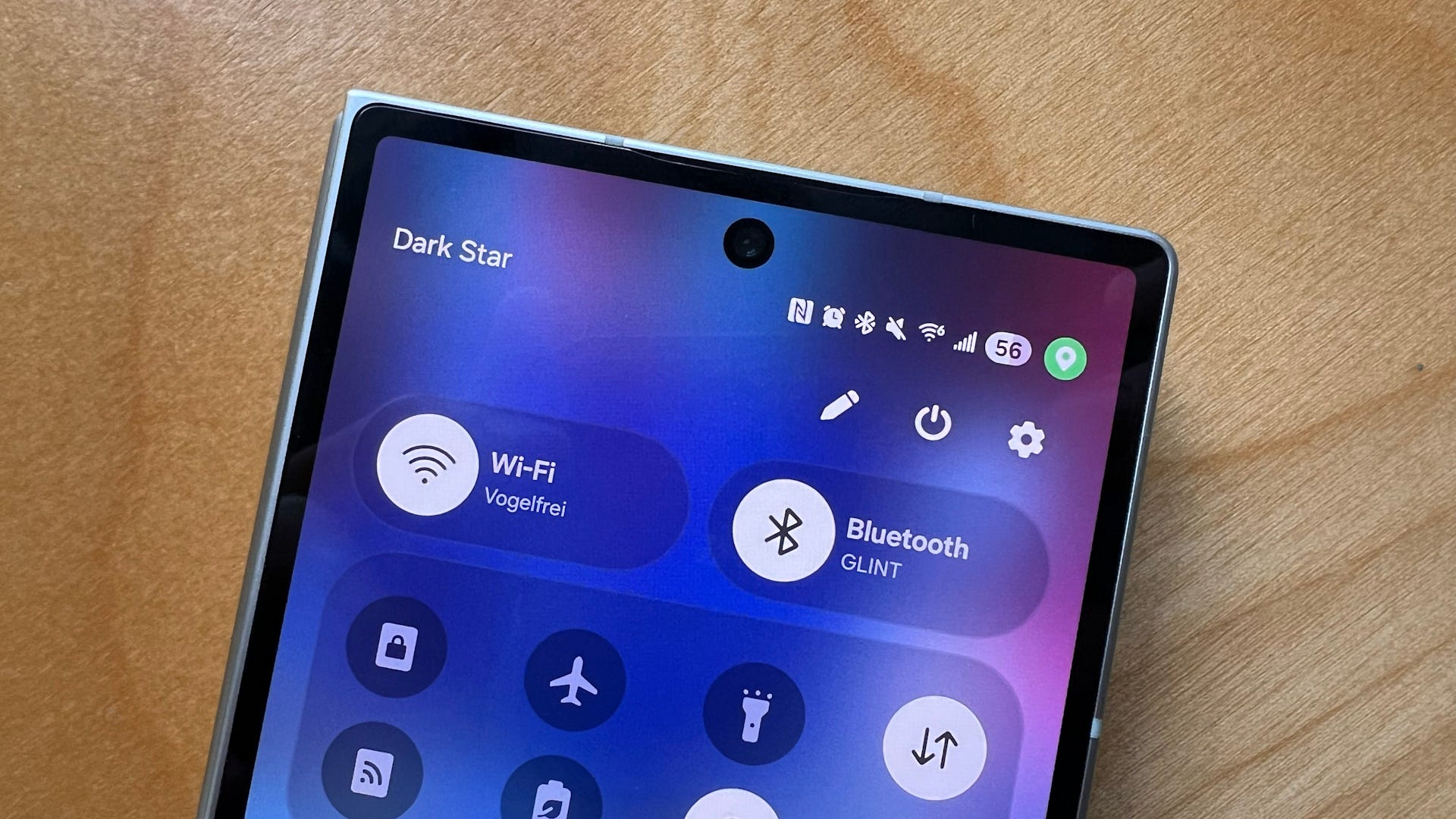
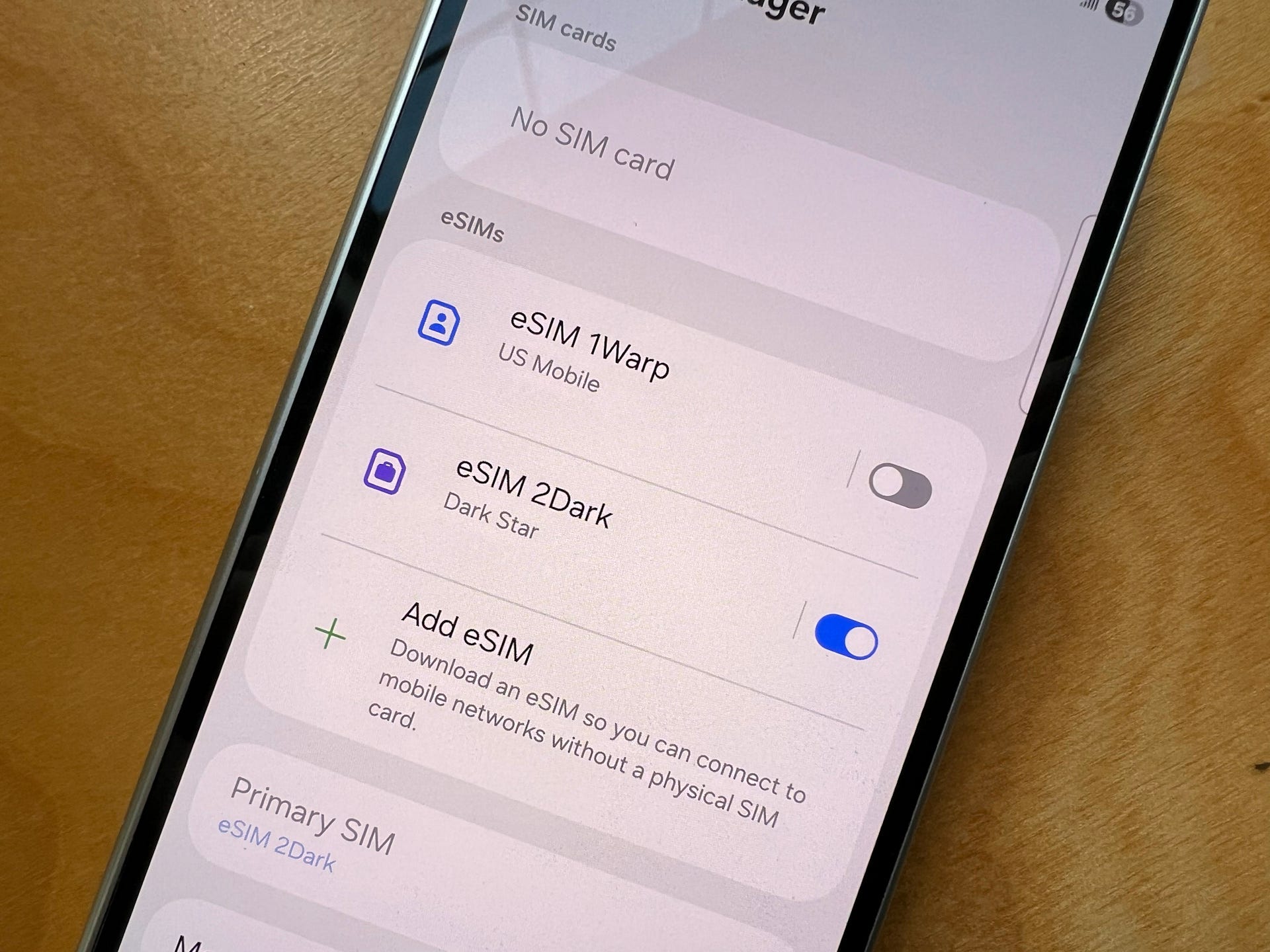
US Mobile doesn’t switch on the fly, but US Mobile provides access to multiple big cellular networks through one provider. Don’t like one provider’s network in your area? You can switch in a few clicks on US Mobile’s website. You don’t have to port your number to a new carrier. This is huge — it makes the process of choosing the right network for your geographic area so much more simple.
US Mobile also offers a multi-network feature. For a few bucks extra per month, you could have a phone that switches between multiple big networks to give you the best data connection in challenging situations. I played with this, but I haven’t needed it. Still, it’s a unique feature, and it reminds me so much of what Google Fi was supposed to be.
T-Mobile’s website was a disaster, but I’ve had a great experience with US Mobile’s website. The process of creating a line and switching cellular networks was fast and easy, and the chat support worked fine — in my experience. I was never a fan of T-Mobile’s customer service, and I’d rank US Mobile’s customer service above T-Mobile’s.
Why I recommend US Mobile (for real)
I’m sure I could make more money by shilling some other cellular network. But I’m recommending what I actually use, and what I switched to in the summer.
I cut my bill from about $660 per year per line to about $270 — and I spent even less the first year. That’s huge to me.
I can switch between big cellular networks in a few clicks, without porting my number to a new carrier. You can choose what you want to use, and trial out multiple providers.
It was easy — I did it in a few clicks — and the transfer just took about 15 minutes before my phone number ported over.
So, if you’re interested, give US Mobile a look. (If you use this link, I’ll make a few bucks to help pay my bills.)
The part where I opine about affiliate posts
As I explained when I detailed why I wasn’t going to recommend a paid VPN — I just don’t think most people need one — I plan on sending out a post or two a month like this, on top of the normal newsletters. (This week, it’s a vacation week. This is apparently how I spend my downtime!)
If you don’t want to see the occasional piece like this, you can create a filter in your email client of choice and filter out pieces that have “Support Me” in the subject line. But I promise to be respectful.
It’s weird writing a piece like this. Everything I wrote above is true — I did switch to US Mobile this summer, and there were a lot of people and readers at The Intelligence who made the switch around the time I was leaving that job. I’ve had a great experience — I like US Mobile better than T-Mobile, and it’s way cheaper. I have the most network choice I can get in one cellular provider.
So why do I still feel so weird writing this right now?
When you’re a journalist at a traditional publication, you work with a whole team of people. When I ran How-To Geek as Editor-in-Chief, we had a separate commerce team in charge of inserting affiliate links and also writing the occasional affiliate post. I wasn’t sure of the exact workings.
As a traditional journalist, you definitely don’t write this type of post yourself!
But why not?
Well, honestly, this type of piece is what affiliate content originally should have been. It’s a best-case scenario: A person who uses a product, a real company selling a useful product, and the company paying the person a small referral commission each time someone goes and tries it out.
In its best case scenario, this is better than an ad, right? It’s not some banner ad I’m not familiar with — it’s a real product I personally use and endorse.
That was the original best case scenario, but then affiliate links metastasized. The web became full of them. These days, they often function more as marketing content than a real endorsement. That’s a shame.
I’m trying to do it the right way: I’ve used this for months, I like it, and I’d recommend it either way. That’s all.
This Thanksgiving, I’m grateful for you
Have a great Thanksgiving Day weekend if you’re in the US — and have a great weekend if you’re not in the US. I’m grateful to have you reading my work.
And hey — give US Mobile a look. I really did switch, and I really do recommend it.
But, more importantly, if you’re still spending $40 or more each month on your cell phone bill, you should consider shopping around. There’s a lot of competition, and you can save a lot of cash in just a few clicks.
I switched to U.S. Mobile several years ago and loved it so much that I convinced my son and his family to switch, and also my girlfriend to switch too. We're all so happy with the service and the price. I can recommend it without reservation. I've traveled extensively and camped in parks away from urban areas and seldom have any problem with the phone connection or the hotspot.
My family and I switched to US Mobile in December 2023 (7 lines) and we have 9 lines with them now. I've been very happy. The fact that you can use any of the big 3 carriers (Verizon, T-Mobile, or AT&T) for your lines is awesome. Any of our lines can use any of the networks. So, our daughter lives in an area where Verizon or AT&T is best, but T-Mobile is best for 7 of the 9 lines. If you are traveling to an area where your normal network doesn't work well, just switch to a different network. We don't use a lot of cellular data since we are often at home on Wi-Fi. So, in our case, all 9 lines cost us less than $150/month, even with some data top-ups each month.
We use shared data plan pools and have from the beginning. The only problem is there isn't a way yet (supposedly US Mobile is working on it) to set hard limits on lines to prevent them from using more of the data pool than you might like. So, instead of having one big pool with all 7 lines (now 9 lines) sharing the data, we now have 4 pools (6 lines on one pool and the other 3 lines on their own pool). The first line on a pool is free and every line after that is $8. So, doing this saves $24 (for the 3 lines that are on their own pool), but it also is a work around so that the those lines can only use the data in their pool. The trick is setting the base data plan for each pool to about what you need/want to use each month. Sure, you can always do data top-ups (manually or automated) if you need to, but those are a bit more expensive than the base data plans are. You used to be able to buy 1GB data top-ups, but it looks like they changed the minimum to 2GB in the last month or so. I should add that your base data does NOT roll over to the next month, but data top-ups do roll over.
If one wants/needs unlimited data plans, US Mobile seems to have some really good ones. It still might be cheaper to simply have a set data plan if you really only need X amount of data per month. When I researched the priority levels available for US Mobile's Warp (Verizon), Dark Star (AT&T), and Light Speed (T-Mobile) networks, they were getting if I remember correctly the top priority level for AT&T and Verizon and the 2nd highest priority level on T-Mobile.
That is also a benefit of the using a data pool. All data on US Mobile's data pools are at the highest priority level. This isn't true with the unlimited plans.
Correction (on 12-05-2025) --
I revisited the QCI/5QI data priority levels. I was correct in my memory that US Mobile's Light Speed is getting the 2nd fastest priority level (QCI 7). However, Dark Star (AT&T) and Warp (Verizon) are getting the lowest data priority level by default for most plans. So, if T-Mobile works well in one's usual area, then US Mobile's Light Speed network is the one to maybe go with.
Granted, it is important to remember that the QCI/5QI data priority level really only comes into play when the network congestion reaches a certain level. If a network is not that congested, then everyone might see very high speeds since nobody is necessarily having their data de-prioritized.