

This is the first personal essay I’ve ever written. I’m offering it as a thank-you for supporting me. So, take a seat: The show is about to begin.
(*I originally published this essay exclusively for paying subscribers, but I’ve now made it available to everyone. I hope you find it interesting.)
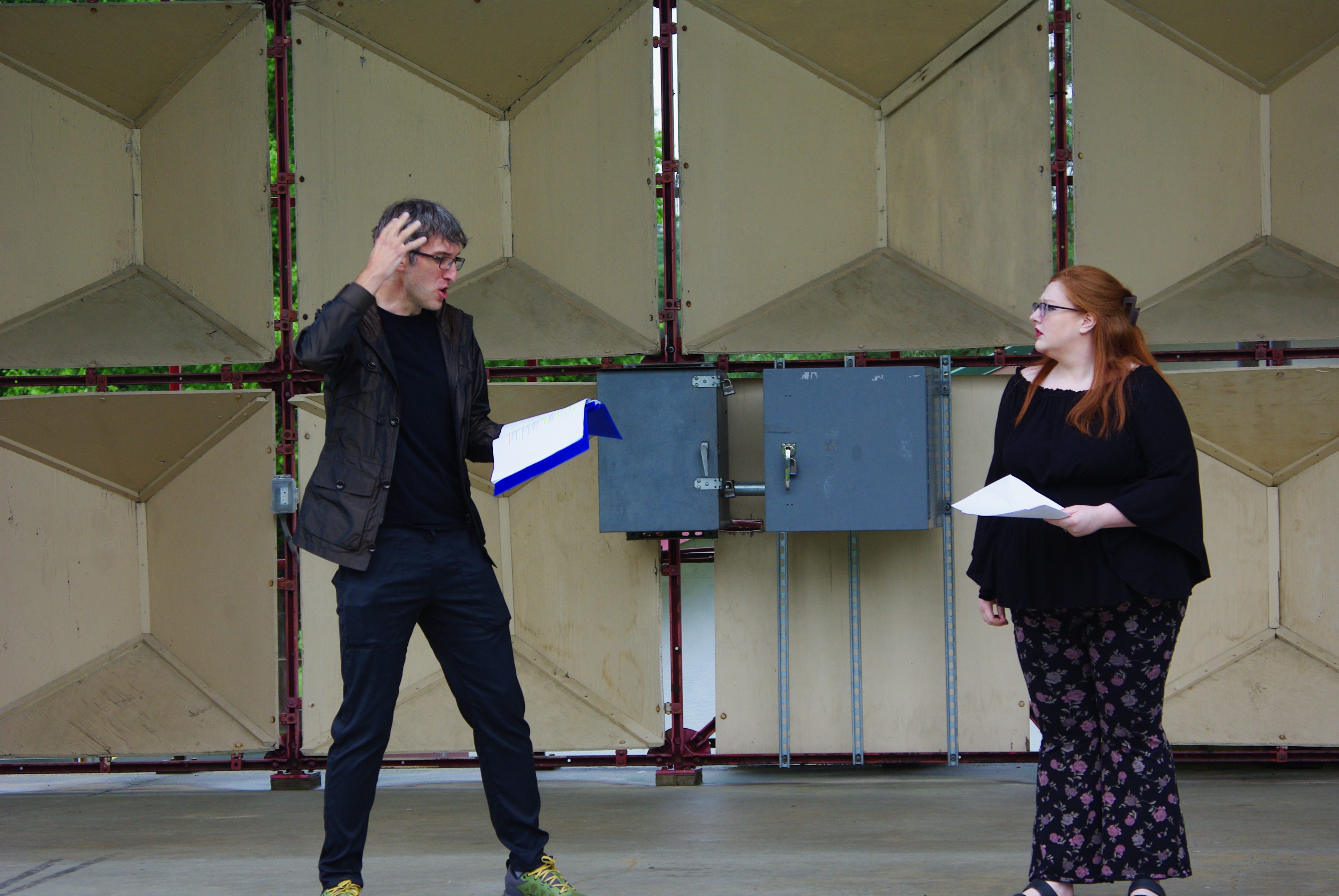
This summer, I was on stage performing Shakespeare in the Park with the Nashua Theater Guild. We performed Twelfth Night, and I played Sir Andrew Aguecheek.
Twelfth Night is a comedy, and Sir Andrew is a ridiculous character. I made a fool of myself, the audience laughed, and it was glorious.
People asked me whether I’d performed on stage before. Nope — it was my first time.

But most of the time wasn’t spent on stage performing the play in front of an audience. It was spent in rehearsals. It was spent exploring the character, playing with the delivery, and honing in on the right portrayal. It was — actually — a lot like writing has always been for me.
Whether it’s a how-to article about accomplishing something in Windows or a performance of a character on a stage, there’s a shared creative thread.
Creatively, transformations in the media industry have been challenging for me over the past few years. In 2023, I was Editor-in-Chief of How-To Geek while LifeSavvy Media sold it to Valnet. I did my best to help my team through the acquisition, but I knew I had to leave — that I couldn’t join Valnet as their Editor-in-Chief to help disassemble something I had built and loved deeply.
The Intelligence gave me a lifeline, and I had the privilege of writing Windows Intelligence for two years. But, at the same time rehearsals were ramping up, I learned Windows Intelligence was ending — and, with it, my job. It left me adrift.
As I navigated the end of my job and my dread over what came next, the rehearsals gave me a place where I didn’t have to be Chris Hoffman, the professional tech writer. I was just some guy being ridiculous in a library basement or on stage in a park.
At the rehearsals, I wasn’t thinking about my career and how I was going to pay my mortgage. I was asking myself: How was I going to play this character? What the heck was Sir Andrew even thinking?
Originally, tech service journalism — early How-To Geek, early Lifehacker, and so many other places — was fun. And it was weird. These were experimental blogs. The people writing them didn’t make much money. You wrote for places like that because you loved it — because you were called to do it. You wrote for them because the work was joyous. (At least, I did. That’s how I’d like to remember them.)
“You have the right to work, but never to the fruit of the work. You should never engage in action for the sake of reward, nor should you long for inaction.” - The Bhagavad Gita
In community theater, it isn’t about money. No one’s making a cent. It’s about the creative process. It’s about the joy in craft. I wasn’t competing with anyone.
There aren’t too many spaces like that left in society these days.
When it was pouring rain as we set up for the second of our four shows, I knew that I didn’t really care if we didn’t have an audience. I was doing the performance for me.
For me, tech writing has always been like that. Yes, I want to write something awesome and useful, just like I wanted to put on an entertaining show. I want you as a reader to get something out of what I’m writing, and I wanted the audience to laugh at my performance.
But what I really care about is the craft. The process of researching, writing, and arranging thoughts was — and still is — joyous to me. That’s the same thing I felt on the stage.
Why I’m being extra weird lately
So, perhaps I am — and have always been — an artist? Maybe writing has always been art to me, even when I was writing 5000-word articles about the Windows Task Manager. Maybe my calling is to bring more creative fire to tech writing — for the sheer joy of it
I’ve written about the affiliate pressures I felt, the ways Google’s adwords policies shaped our editorial coverage, and how I almost got sued for attacking scammy software.
I reimagined the downloadable PDF — something we loved at both How-To Geek and MakeUseOf — as a retro single-page ASCII artifact you can have on your desk.
I write laptop reviews for PCWorld and photograph the laptop in front of a lake in the forest.
I dabble with a video show where I chat with other journalists about the industry. We talk about useful things people normally keep secret.
The core thread is the creative energy I want to express — for the sake of the craft. I keep playing with the idea of what tech writing can even be. I want to bring back the creative energy that made people love tech journalism in the first place.
Sometimes, when I’m writing something, I feel just like I did when I was planning my on-stage delivery. That’s how I know it’s going to be a good one.
Thanks for supporting The Windows ReadMe, and thanks for reading this. You’ve given me a creative outlet. And I hope I’ve given you something you won’t find elsewhere.
Your introspective article was very real and personal. Thank for sharing yourself with us!
Enjoyed this, keep the Shakespeare coming